Should You Rent or Buy a Trailer? A Complete Guide for Texas Trailer Owners
THE COMPLETE GUIDE: SHOULD YOU RENT OR BUY A TRAILER?
If you find yourself needing a trailer for a project, move, vehicle, landscaping job, or construction project, you may eventually ask yourself:
Should I buy a trailer or just rent one when I need it?
There isn’t one right answer for everyone. The best choice depends on how often you’ll use the trailer, what type of trailer you need, where you’ll store it, and how much you’re willing to spend upfront.
For homeowners, contractors, businesses, and occasional trailer users in Greenville, Commerce, and Hunt County, Texas, renting can often be a much simpler option than owning.
Here’s how to decide.
THE TRUE COST OF OWNING A TRAILER
At first glance, buying can seem like the obvious choice.
You pay for the trailer once, and then it’s yours.
But the purchase price isn’t the only cost associated with trailer ownership.
Depending on the type of trailer, ownership can also involve:
• Registration
• Insurance
• Maintenance
• Tires
• Brakes
• Wheel bearings
• Lights and wiring
• Battery maintenance
• Repairs
• Storage
• Depreciation
• Replacement parts
• Time spent maintaining the trailer
A trailer sitting in your driveway may not seem expensive, but those costs can add up over several years.
HOW MUCH DOES A TRAILER COST TO BUY?
Trailer prices vary significantly depending on the type, size, construction, and capacity.
A small utility trailer may cost a few thousand dollars, while larger enclosed trailers, dump trailers, and specialized trailers can cost considerably more.
For someone who uses a trailer several times every month, purchasing may eventually make financial sense.
But if you’re only going to use it a few times a year, tying up thousands of dollars in a trailer may not be the best financial decision.
That’s where renting comes in.
WHEN DOES RENTING MAKE MORE SENSE?
Renting is often attractive when you only need a trailer occasionally.
For example, you might need a trailer to:
• Move furniture
• Pick up a large purchase
• Haul landscaping materials
• Clean out a property
• Move a vehicle
• Complete a home renovation
• Haul brush
• Move belongings into storage
• Complete a weekend project
If you’re only doing these things occasionally, renting allows you to pay for the trailer when you actually need it.
You don’t have to purchase a trailer that may sit unused for months.
YOU DON’T HAVE TO FIND A PLACE TO STORE IT
One of the biggest advantages of renting is something people sometimes overlook:
You don’t have to store the trailer.
Trailers take up space.
A large enclosed trailer or dump trailer can take up a significant portion of a driveway or property.
If you don’t have a dedicated storage area, you may have to pay someone else to store it.
With a rental, you pick it up when you need it and return it when the project is finished.
Your driveway stays yours.
MAINTENANCE BECOMES SOMEONE ELSE’S PROBLEM
Owning a trailer means you’re responsible for keeping it in good condition.
That can include checking:
• Tires
• Brakes
• Wheel bearings
• Lights
• Wiring
• Coupler
• Safety chains
• Battery
• Suspension
• Floor and structural components
With a rental, the rental company handles the routine maintenance and fleet upkeep.
That doesn’t mean you shouldn’t inspect a rental before using it. You should always make sure the trailer is appropriate for your vehicle and that everything appears to be in proper working order.
But you don’t have to spend your weekends maintaining a trailer you rarely use.
WHAT ABOUT DEPRECIATION?
Trailers, like vehicles and other equipment, can lose value over time.
The amount of depreciation depends on the type of trailer, its condition, age, brand, and demand.
If you buy a trailer and only use it a handful of times, you may eventually realize you’ve spent thousands of dollars on something that spends most of its life sitting unused.
Renting eliminates the need to worry about reselling the trailer later.
You simply rent what you need, use it, and return it.
DIFFERENT PROJECTS REQUIRE DIFFERENT TRAILERS
Another major advantage of renting is that you aren’t locked into one type of trailer.
Imagine you own a utility trailer.
That’s great—until you need an enclosed trailer.
Then you need to move a vehicle.
Then you need to haul a load of dirt.
Suddenly, owning one trailer doesn’t solve every problem.
With a rental company, you can choose the trailer based on the project.
Need to protect furniture or equipment?
Consider an enclosed trailer.
Need to transport a vehicle?
Consider a car hauler.
Need to haul dirt, gravel, brush, or debris?
A dump trailer may be the better choice.
Need an open trailer for general hauling?
A utility trailer may be all you need.
That’s one of the biggest advantages of renting: you can choose the right tool for the job instead of trying to make one trailer do everything.
WHEN BUYING A TRAILER MAKES SENSE
Renting isn’t always the better choice.
Buying may make sense if you:
• Use a trailer frequently
• Own a business that requires regular hauling
• Need a trailer almost every week
• Need a specialized trailer frequently
• Want the convenience of having a trailer available at all times
• Have adequate storage
• Are comfortable handling maintenance and repairs
• Expect to keep the trailer for many years
For a contractor who uses the same trailer every day, buying can be a very different financial decision than it is for a homeowner who needs one twice a year.
A SIMPLE WAY TO THINK ABOUT IT
Ask yourself:
“How many days per year will I realistically use this trailer?”
If the answer is only a handful of days, renting deserves serious consideration.
If the answer is several dozen days—or even hundreds of days—buying may eventually become more economical.
But don’t only compare the rental price to the purchase price.
Compare the total cost of ownership.
BUYING:
Purchase price + financing + insurance + registration + maintenance + repairs + tires + storage - resale value
RENTING:
Rental cost + fuel/towing costs
The numbers will be different for everyone.
EXAMPLE: THE OCCASIONAL HOMEOWNER
Imagine you own a home in Greenville and think you’ll use a trailer several times a year.
You might need one for a landscaping project in the spring, a furniture pickup in the summer, and a cleanup project in the fall.
Buying a trailer could mean spending thousands of dollars for something that sits unused most of the year.
Renting allows you to get the trailer when the project comes up without taking on the long-term ownership costs.
EXAMPLE: THE CONTRACTOR
Now imagine you’re a contractor who uses a trailer four or five days every week.
In that situation, owning may make much more sense.
The trailer is producing value for the business constantly, and purchasing may eventually cost less than repeatedly renting.
This is why there isn’t a universal answer to the rent-versus-buy question.
It depends on how you use the trailer.
DON’T FORGET ABOUT YOUR TOW VEHICLE
Whether you rent or buy, there’s one thing you should never overlook:
Your tow vehicle has to be capable of safely handling the trailer and load.
Before towing, consider:
• Vehicle towing capacity
• Hitch rating
• Trailer weight
• Cargo weight
• Tongue weight
• Trailer brakes
• Electrical connection
• Safety chains
• Tires
Never exceed the manufacturer’s rated towing or payload capacities.
If you’re unsure whether your vehicle is capable of towing a particular trailer, ask before renting or purchasing.
RENTING CAN ALSO BE A GREAT WAY TO TEST A TRAILER
There’s another advantage to renting that doesn’t get discussed very often.
You can try before you buy.
Thinking about purchasing an enclosed trailer?
Rent one first.
Thinking about buying a dump trailer for your business?
Rent one for a project.
Considering whether a certain trailer size will work for you?
Rent it and see.
A rental can give you real-world experience before committing thousands of dollars to a purchase.
You may discover that you need a larger trailer—or that you don’t actually need to own one at all.
WHY CF RENTALS?
CF Rentals is a locally owned trailer and equipment rental company serving Greenville, Commerce, and Hunt County, Texas.
Our rental fleet gives customers access to different trailer types without having to purchase and maintain each one themselves.
Our rentals include options such as:
• Enclosed trailers Trailer Rentals in Commerce
• Car haulers 20' HD Car Hauler in Commerce
• Dump trailers 10' Dump Trailer in Commerce
• Utility trailers 12' Utility Trailer in Commerce
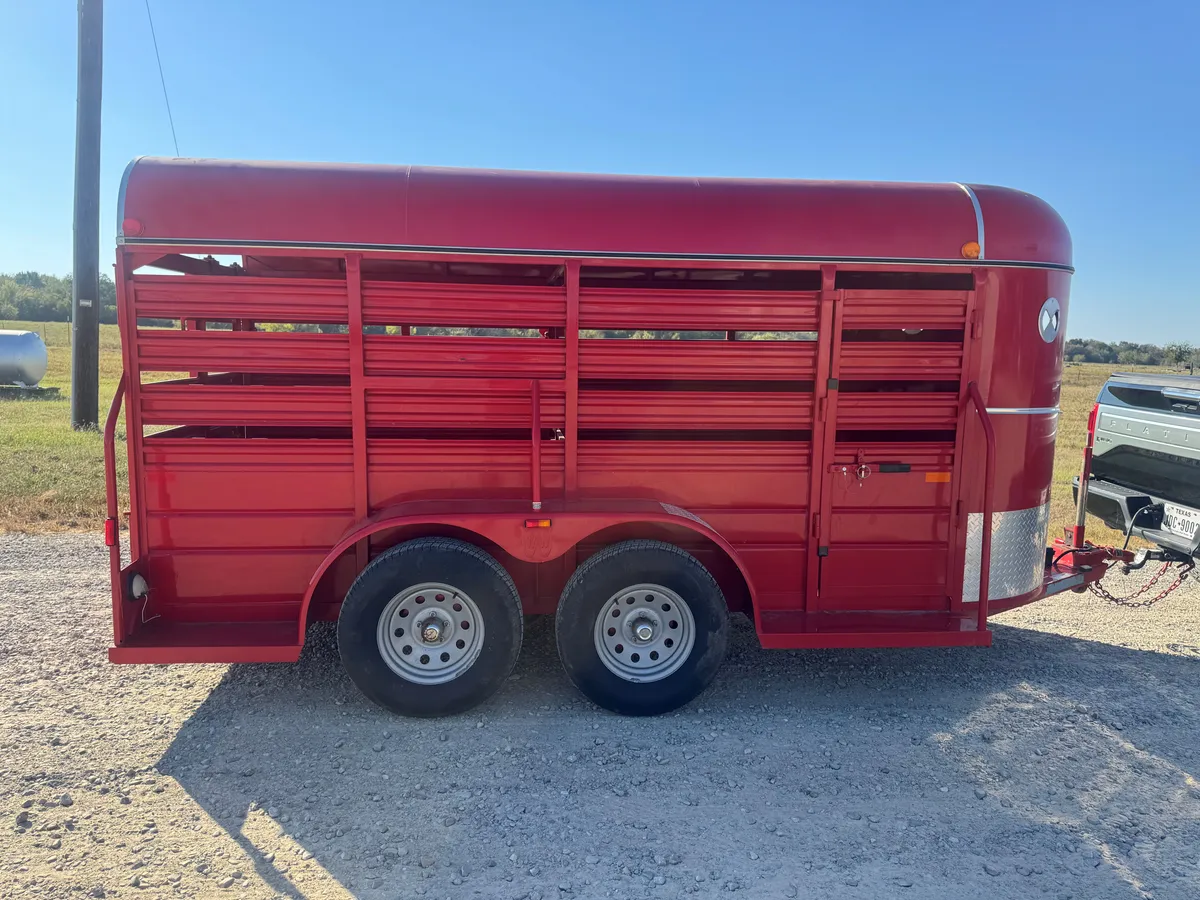
• Stock trailers 14' Stock Trailer in Commerce
• Equipment and tools Equipment Rentals in Commerce
• Moving totes
Whether you’re tackling a weekend project or need equipment for a larger job, renting can give you access to the equipment you need without the long-term commitment of ownership.
SO, SHOULD YOU RENT OR BUY?
For occasional trailer users, renting can often be the simpler and more cost-effective option.
You don’t have to worry about storing the trailer year-round, maintaining it between projects, or selling it when you no longer need it.
For people who use a trailer constantly, buying may make more sense.
The key is to look beyond the sticker price and consider the total cost of owning versus the cost of renting when you actually need it.
And if you’re not sure, renting first can be a great way to find out.
NEED A TRAILER IN HUNT COUNTY?
Whether you need an enclosed trailer for a project in Greenville, a car hauler in Commerce, or a dump trailer for a cleanup job somewhere in Hunt County, CF Rentals has options to help you get the job done.
CF Rentals
Trailer & Equipment Rentals